
TREATMENTS
Treatment is determined once the diagnosis is confirmed.
Assessment, objective and response to loading determine what belongs in the plan — not the name of a technique or device.
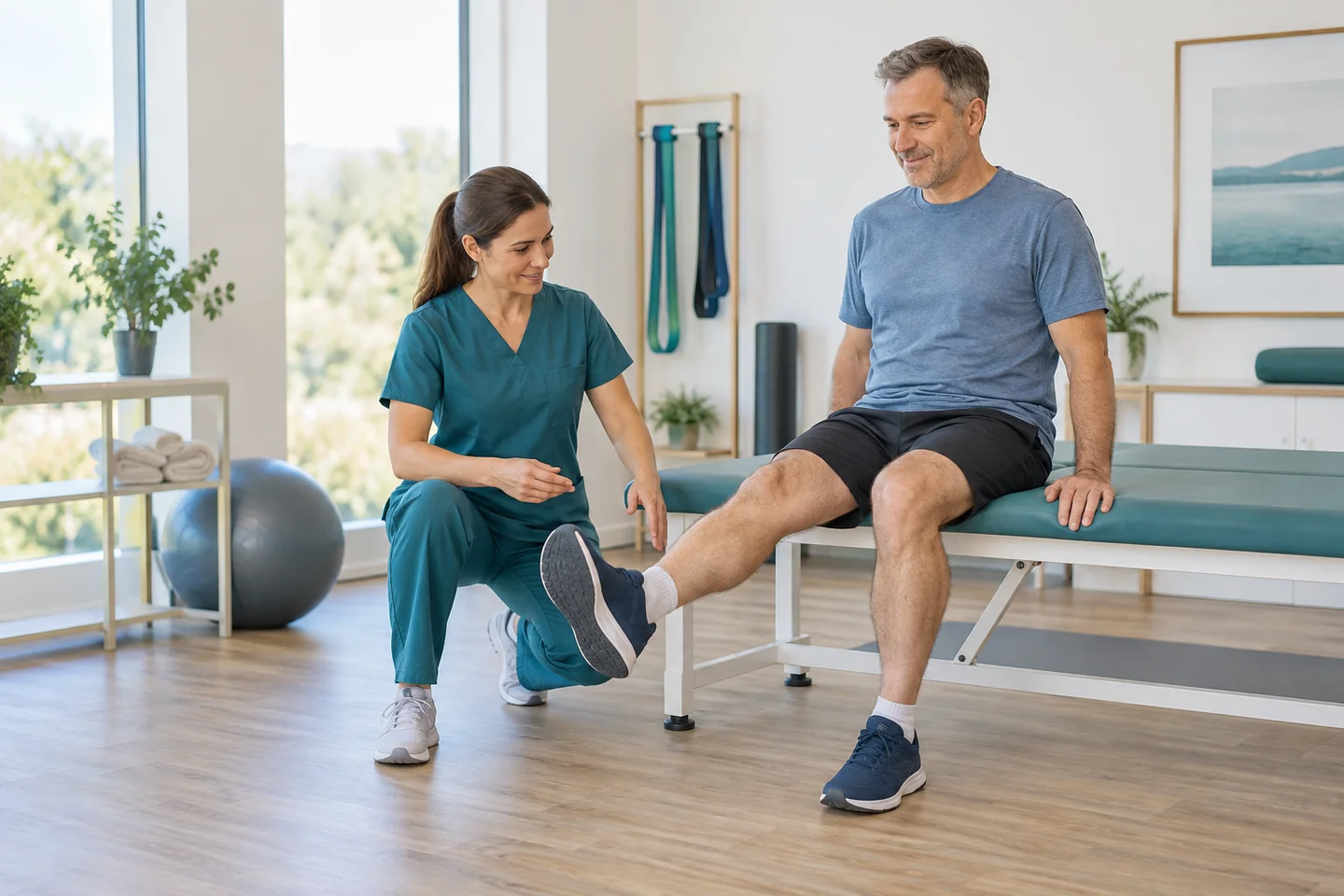
CLINICAL DECISION-MAKING
Four steps before a method becomes part of treatment.
The individual plan changes with the phase, capacity and the goal the patient wants to achieve.
- 01
Assessment
History, examination and safety establish the starting point.
- 02
Objective
What needs to change and how it will be measured are defined.
- 03
Intervention
The appropriate combination and starting dose are selected.
- 04
Reassessment
Response determines whether the plan continues, progresses or changes.
PLAN COMPONENTS
Not every patient needs every component.
Open each page to understand its role, process, measurement and limits.
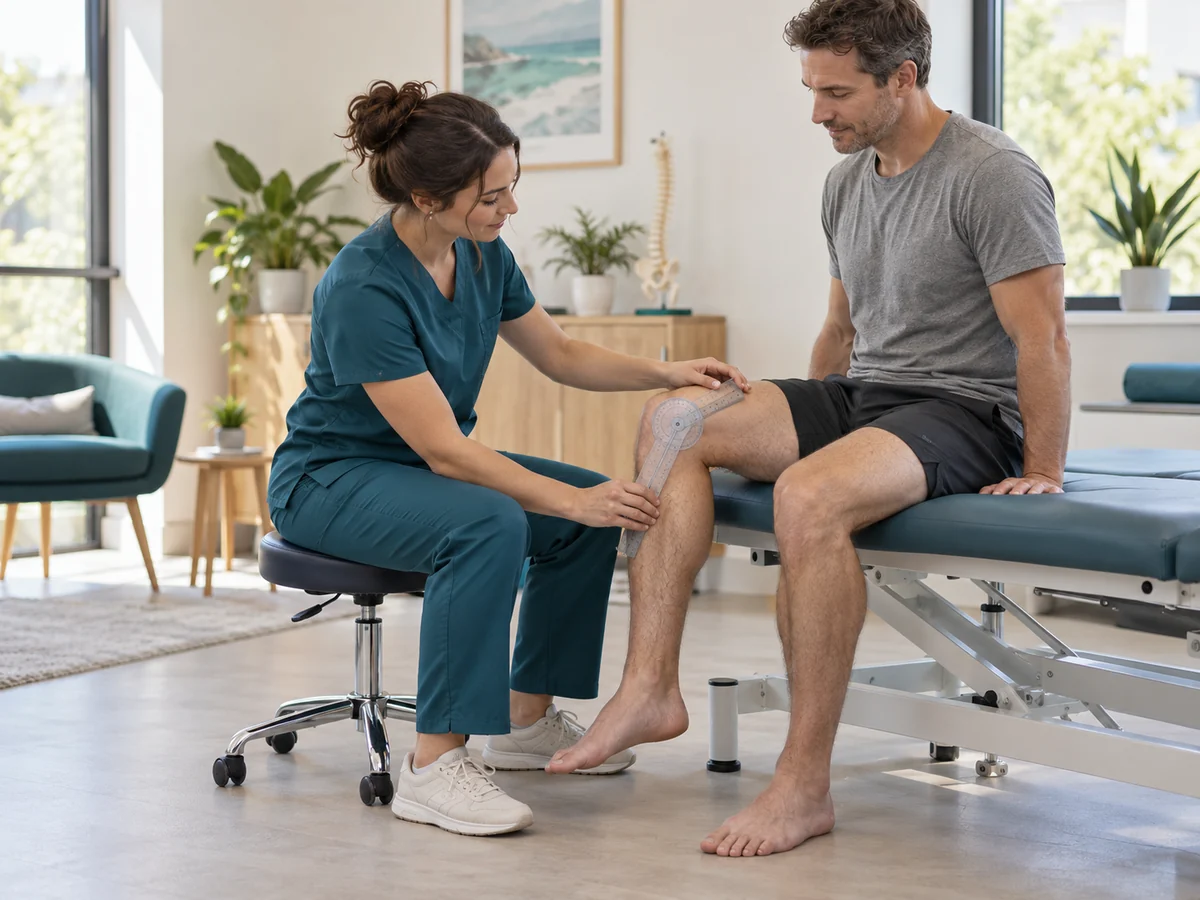
Functional Assessment
History, movement, strength and the tasks that matter to the patient are connected through a structured assessment.
Methods and activities
- Clinical history and goals
- Pain measurement and functional questionnaires
- Joint range of motion (ROM)
- Muscle strength
- Clinical tests, balance and functional tasks

Therapeutic Exercise
The programme is built around current capacity and adapted to response, function and goals.
Methods and activities
- Mobility exercises and stretching
- Muscle activation and strengthening
- Balance and movement control
- Gait and everyday task training
- Return-to-sport exercises
- Home exercise programme
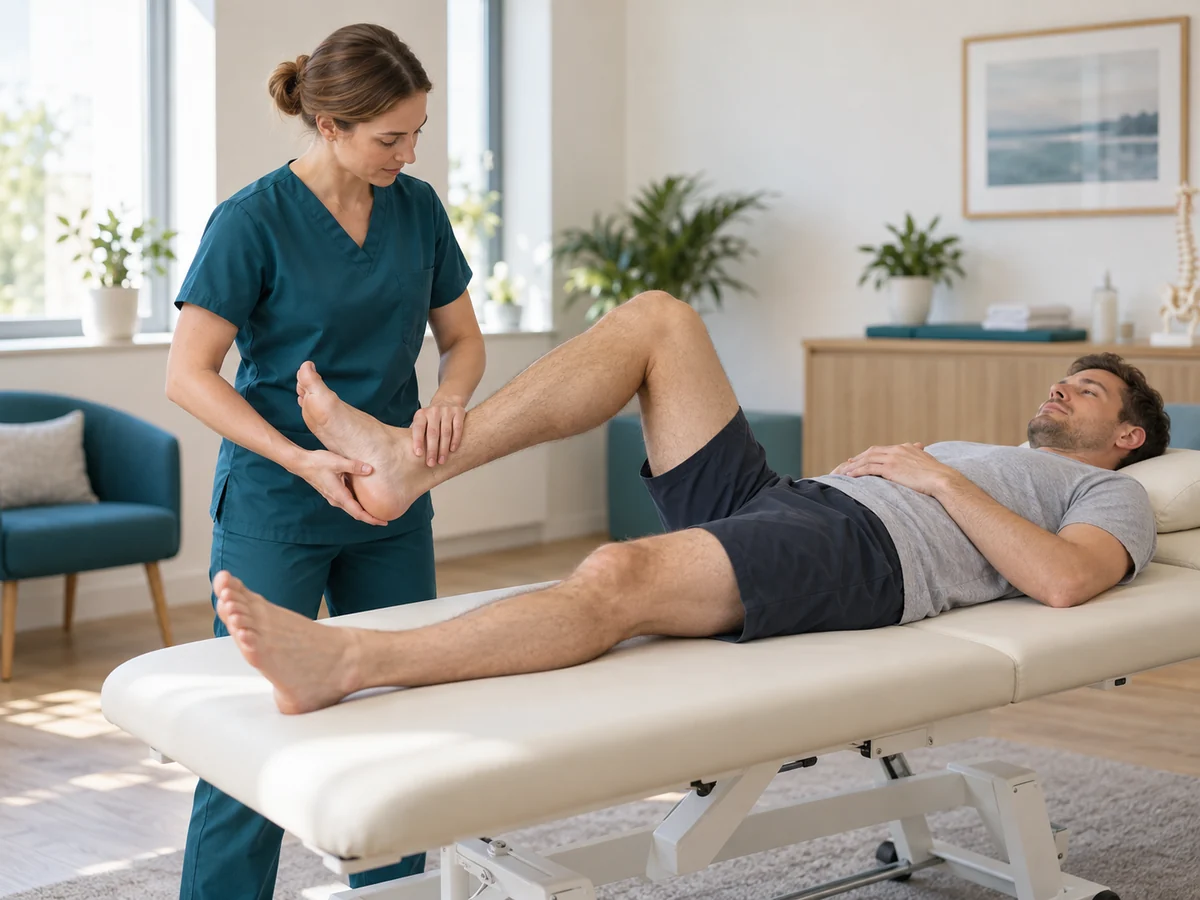
Manual Therapy
Manual techniques are used when they support a defined objective and are reassessed against the response.
Methods and activities
- Joint mobilisation
- Soft-tissue techniques
- Passive and assisted movement
- Assisted stretching
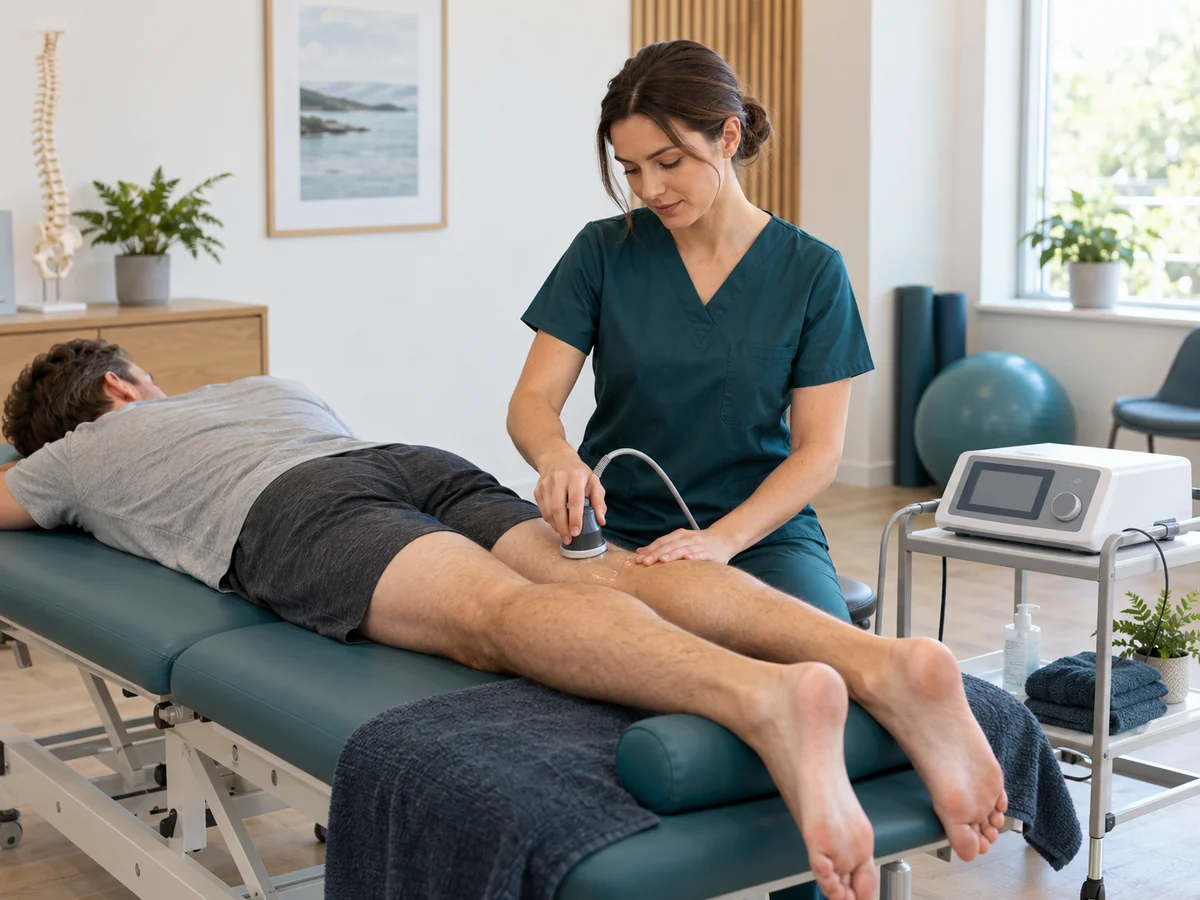
Instrumental Therapy
The modality, dose and expectation should connect to the indication and rehabilitation phase.
Methods and activities
- Radial shockwave
- TECAR: capacitive and resistive
- Therapeutic ultrasound
- Electrotherapy: TENS, interferential, galvanic and Russian currents
- Super Inductive System (SIS)
CLINICAL PATHWAYS
Choose the service, not the technique.
Care may involve physiotherapy, orthopaedic coordination or sports rehabilitation according to the case.
Physiotherapy
Musculoskeletal assessment, active, manual and technology-assisted care within a measured plan.
→02Orthopaedics
Specialist consultation, imaging review and coordination with rehabilitation when needed.
→03Sports Rehabilitation
Progressive restoration of strength, capacity and the abilities required by sport.
→04Return to Sport
Functional testing and criteria-based decisions before full return to sport.
→NOT SURE WHERE TO START?
You do not need to select the treatment in advance.
Start with the concern that limits you or book an assessment. Technology is used only when it has an indication and a clear role in the plan.
PHYSIOTHERAPY
Clinical cases
Assessment, treatment and follow-up from individual rehabilitation cases.
0 cases
No cases have been published in this category yet.
BOOK AN ASSESSMENT
Tell us what is limiting you. We will help identify the right first assessment.
Contact the clinic or complete the request. It is sent securely to the clinic portal and confirmed by the team.