
Modified return.
Parts of training resume with defined restrictions, controlled volume and monitoring.
RETURN TO SPORT
Return to participation, return to sport and return to performance are different steps. Biological time, capacity, exposure and athlete readiness are considered together.
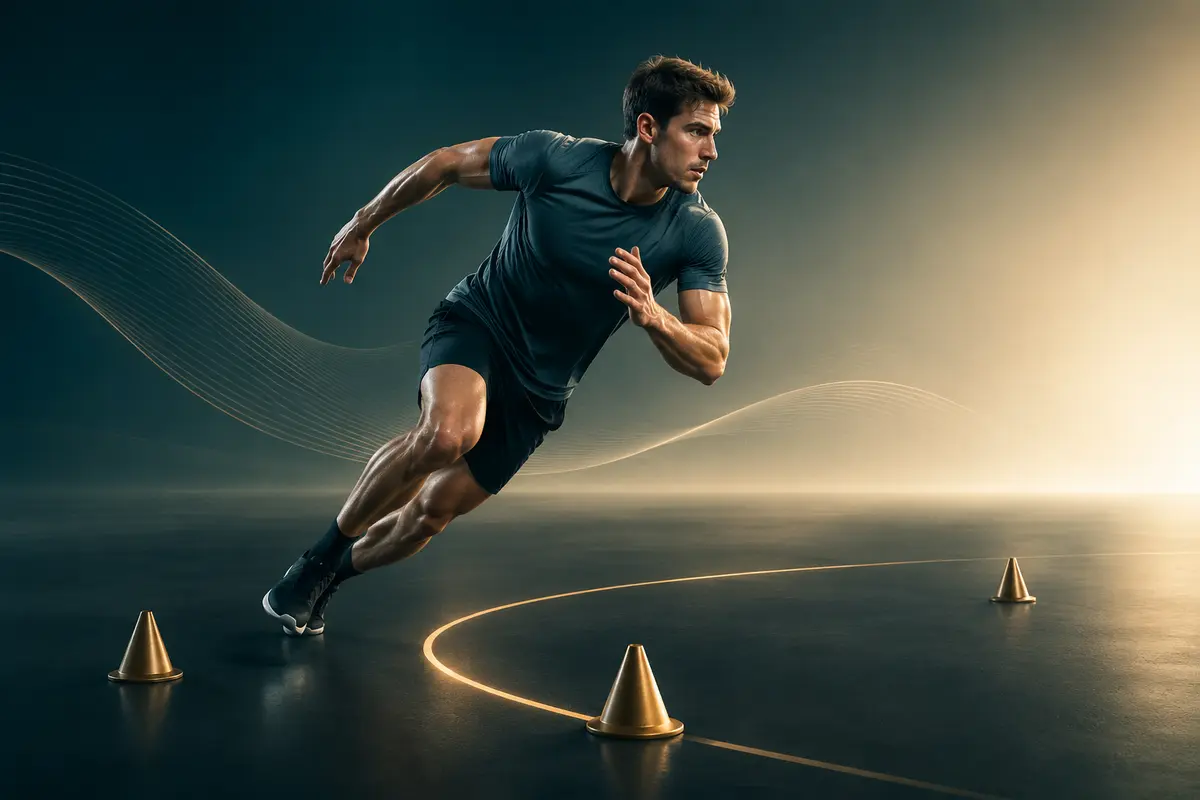
RETURN CONTINUUM
Return is not a single moment. The athlete progresses, is monitored and may step back when response to loading requires it.
Parts of training resume with defined restrictions, controlled volume and monitoring.
The athlete returns to the sport but may not yet be at the previous level of performance.
Capacity, confidence and performance quality continue to develop after return to sport.
READINESS
Each domain is interpreted for the injury, sport and the athlete’s previous level.
Capacity is assessed against the injury, the other limb and the demands of sport.
Force production, absorption and control are reviewed through progressive tasks.
Acceleration, deceleration and change of direction are tested for the athlete’s role.
Training exposure, confidence and post-load response complete the picture.
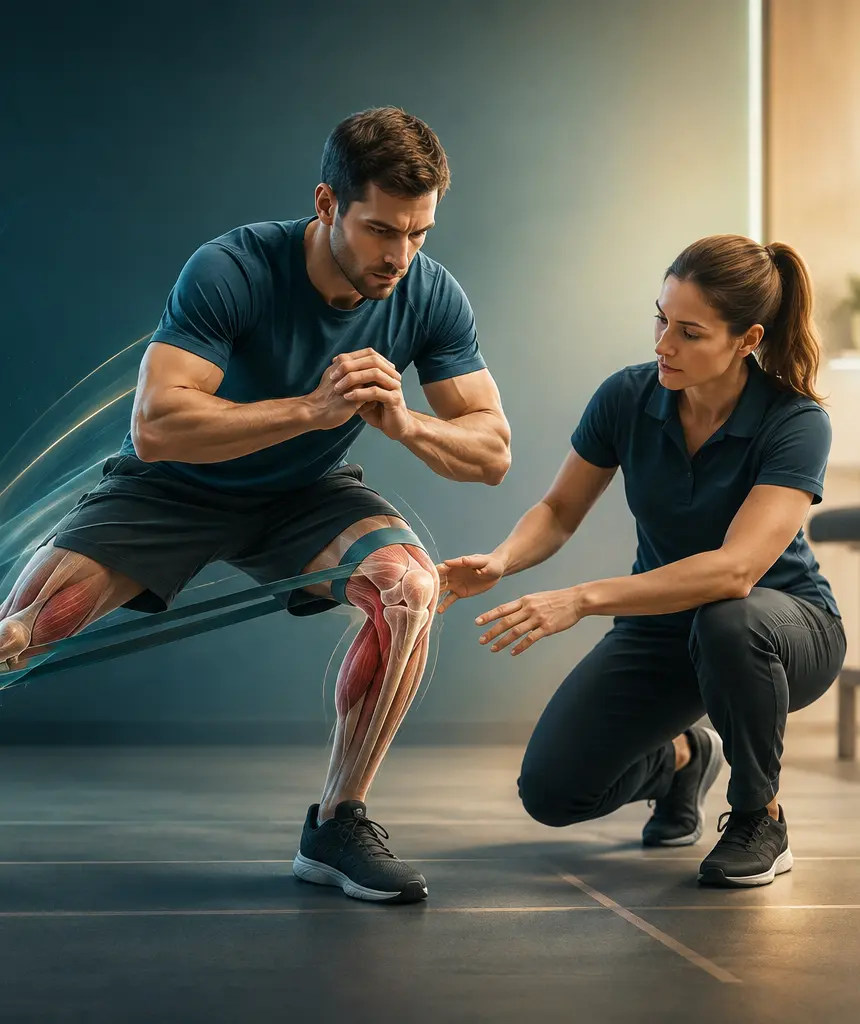
TEST BATTERY
Results are interpreted with clinical assessment, injury history, training exposure and the real demands of sport.
Thresholds and tests are not universal. They adapt to the procedure, injury, sport, position and actual training exposure.
SPORT EXPOSURE
Laboratory or clinical testing does not replace progressive exposure to speed, fatigue, contact and decision-making.
Injury, phase, history, previous level and positional demands are defined.
Strength, power, speed and tolerance develop before final testing.
The athlete resumes modified parts of training with restrictions and monitoring.
Sport participation resumes when functional criteria and exposure are sufficient.
Load and quality progress towards the previous or target performance level.
DECISION FOUNDATION
Sources support the general structure; individual decisions require examination, context and collaboration.
COMMON QUESTIONS
General guidance for return to sport; individual decisions follow examination.
No. Biological time matters, but it must be connected with symptoms, capacity, functional testing and sport exposure.
Modified training provides controlled exposure; return to sport requires broader readiness for full tasks and loading.
No. Symmetry is only one indicator and may mislead if the other limb has also lost capacity. Reference values and sport demands are also used.
No. Testing reduces uncertainty and supports decisions, but it cannot eliminate risk completely.
PHYSIOTHERAPY
Assessment, treatment and follow-up from individual rehabilitation cases.
0 cases
No cases have been published in this category yet.
BOOK AN ASSESSMENT
Contact the clinic or complete the request. It is sent securely to the clinic portal and confirmed by the team.